Gauteng has had an unusually wet season. Storm warnings have been issued across the province, and fallen trees have been reported from Sandton to Boksburg to Pretoria North. But here's the thing most homeowners don't realise: the real danger to your trees often shows up after the rain stops.
Why trees fall weeks after a storm, not during
When we get emergency call-outs for fallen trees, a pattern we see again and again is this: the tree didn't fall during the big storm. It fell a fortnight later, during a mild breeze, on a clear day. The homeowner is baffled. The tree had been fine for decades.
What happened is simple physics. Heavy rain saturates the soil around the tree's root ball. Saturated soil holds the roots far less firmly than dry soil does — imagine the difference between pulling a tent peg out of hard-packed ground versus out of mud. The tree is suddenly anchored by less than half the grip it normally has.
During the storm itself, the tree might survive because the canopy is wet (and therefore heavier and more stable), winds come from multiple directions, and the root system is still mostly intact. But in the days and weeks that follow, the soil stays soft, the roots start to rot in the waterlogged environment, and the next modest wind can bring the whole tree down.
Warning signs to look for on your property
After heavy rain, take a slow walk around every mature tree on your property. You're looking for:
1. New leans
A tree that used to stand straight but now has a visible lean. This is the clearest danger sign. Look at the trunk against a fixed reference — a fence post, a corner of your house, a neighbour's boundary wall. If the tree is leaning towards that reference more than it used to, the root ball is shifting.
2. Raised or cracked soil around the base
When roots start to lift, the soil on the windward side of the tree cracks or rises in a visible hump. You might see bare earth where there was grass, or a ring of lifted turf. This is serious — it means the root plate is moving.
3. Exposed roots
Heavy rain washes topsoil away. If you can suddenly see roots that used to be buried, the tree is losing its grip. Roots that are supposed to be anchoring the tree are now just surface structure.
4. Fungal growth at the base
Mushrooms or bracket fungus on the trunk or around the roots indicate decay. Root rot after saturated soil is a common killer of otherwise healthy trees. The visible fungus is just the fruiting body — the damage is already extensive underground.
5. Sudden leaf loss or canopy thinning
If a tree has dropped a noticeable number of leaves out of season, or the canopy looks thinner than neighbouring trees of the same species, the root system is stressed. The tree is pulling resources back to survive.
6. Cracks in the trunk
Any new crack, especially a vertical one, is a red flag. Trees that have been stressed by wind in saturated soil often develop structural damage that only becomes visible once the bark starts to split.
Which trees are most at risk?
Not all trees are equally vulnerable after heavy rain. The highest-risk profile is:
- Tall, top-heavy trees — eucalyptus (gum) trees, pines, and large jacarandas with dense canopies. The wetter and heavier the canopy, the more the root system has to hold down.
- Trees with small or damaged root zones — trees planted too close to driveways, patios or pool decks, where roots have been cut or constrained over the years.
- Older trees with existing decay — any tree already showing signs of disease, trunk damage, or previous storm damage.
- Trees in recently-disturbed soil — if you've had building work, new landscaping, or drainage installed anywhere near the root zone in the past couple of years.
- Trees on slopes — where water already runs off more aggressively and soil stability is naturally lower.
What to do if you're worried
If a tree on your property is showing any of the warning signs above — especially a new lean or raised soil around the base — don't wait. The cost of a professional assessment is tiny compared to the cost of a tree coming down on a roof, a car, or worse.
A few practical steps:
- Keep people away from the tree. If it's near where cars park, where children play, or where washing gets hung, cordon that area off until it's assessed.
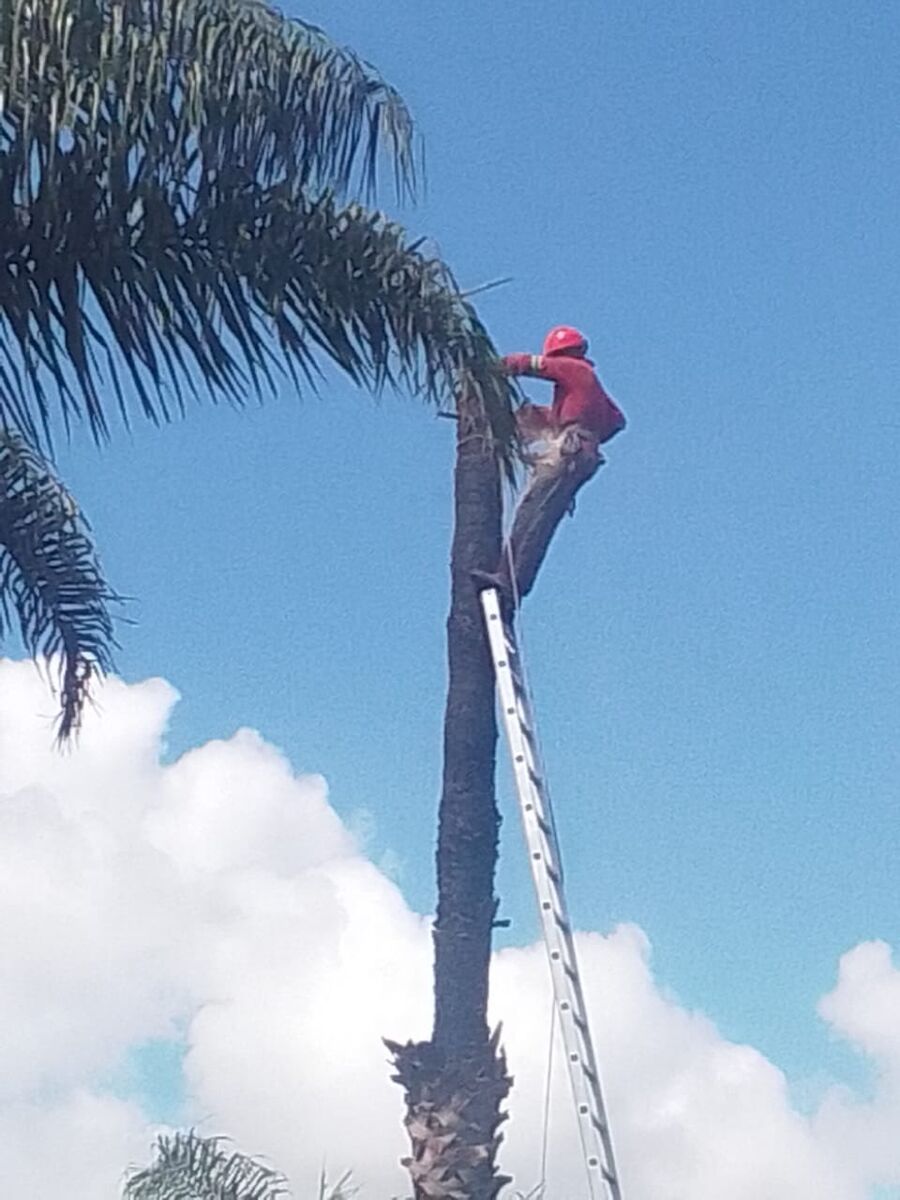
- Don't try to prune or remove it yourself. Adding ladders and bodies under a compromised tree is exactly how people get hurt. A tree that's borderline stable during a calm day can move unpredictably.
- Take photos. Photograph the base, the lean, any cracks or fungal growth. These help a tree feller assess the urgency before they arrive.
- Get a professional opinion quickly. Not every worrying sign means a tree needs to come down — experienced tree fellers can often reduce the canopy, or address root issues without removing the tree entirely. But the assessment needs to happen while there's still time to act.
Worried about a tree?
Send us a photo on WhatsApp or give us a call. We'll tell you if it needs urgent attention — and if it doesn't, we'll say so.
A good time for a routine check
Even if nothing looks obviously wrong, the end of a wet season is a sensible time to have any mature trees on your property professionally assessed. A 20-minute site visit can identify weaknesses that aren't visible to the untrained eye — and often the right response isn't removal, it's selective pruning to reduce wind load.
The best time to deal with a problem tree is before it becomes an emergency. Emergency call-outs after a tree has come down always cost more, and usually involve damage that a routine assessment could have prevented.
Brands Tree Felling provides tree assessments, felling, pruning and stump removal across Johannesburg, Pretoria, Centurion, Midrand, Hartebeespoort and beyond. Emergency call-outs available.